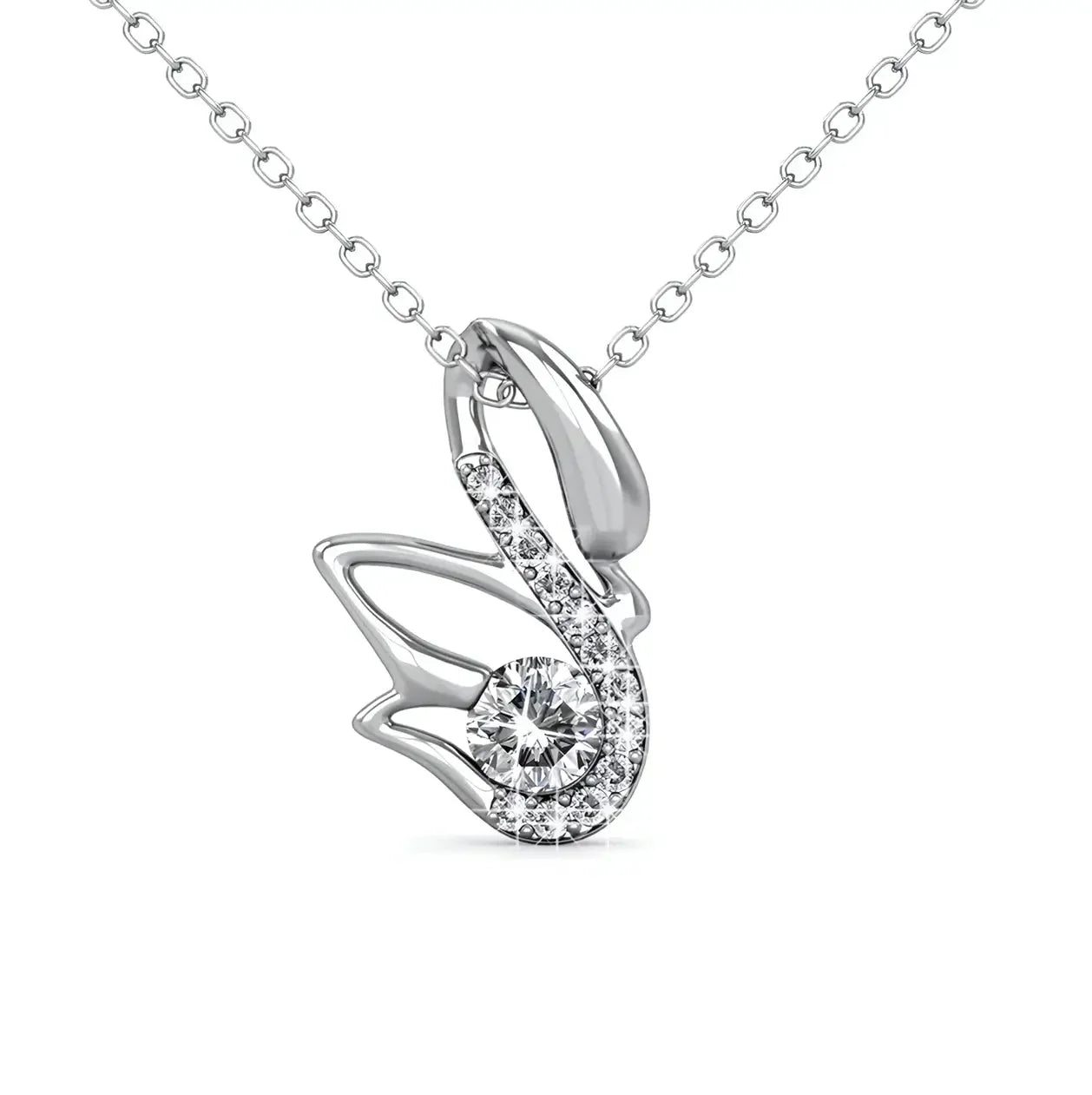
If you've noticed recently that silver jewelry is becoming more expensive, the reason is not simply that retailers have decided so. The truth is simpler: the material itself has become more expensive, and with it, all production costs are rising.
Here's how it looks from a jeweler's perspective.
1) Silver as a raw material has become more expensive
The price of silver is determined on global markets and is influenced by supply and demand. Over the past 12 months, silver has moved sharply upwards at times because:
-
industry uses it more and more (electronics, solar panels, new technologies)
-
the market has been experiencing shortages for years (demand is often greater than available supply)
-
during inflation and uncertainty, more people buy metals as "safer" assets
When a gram of raw material enters the workshop at a higher price, it directly affects the final price.
2) Jewelry is not just "grams of silver"
Many people look at a piece of jewelry and say: "but it's small, why is it expensive?"
Because you're not just paying for the metal, but also:
-
craftsmanship and time (fine execution is labor)
-
stones/crystals, setting, polishing, quality control
-
coatings (rhodium/gold plating), which also have a cost
-
defects/losses (the process involves waste, testing, samples)
When silver becomes more expensive, every mistake and every loss costs more, which makes us work even more precisely – but also with higher production costs.
3) Silver is "pulled" by industry, not just jewelry
Here's the important point: jewelry is not the biggest consumer of silver. Much of the demand comes from industries such as solar panels and electronics. This means that even if people buy fewer pieces of jewelry in a given period, the industry can still keep the price high.
4) Interest rates and inflation "rock" the price
When interest rates are high, metals sometimes cool off. But when the market expects interest rates to fall or there's fear of a crisis, interest in metals returns. This makes silver more volatile (the price can move quickly).
For a jeweler, this means one thing: today's supply is at one price, next month it could be at another – and we need to plan more carefully.
5) What does this mean for the customer?
The most common question we receive is:
"Will it get even more expensive?"
No one can give a 100% guarantee, but the trend is clear: as long as industrial demand is strong and the market remains "tight," silver has reason to stay higher in price.
Finally – our position as a jeweler
When we raise prices, we are actually following reality:
-
the material costs more
-
craftsmanship and coatings are not getting cheaper
-
the market is unstable and requires a buffer
Our goal is not to raise prices, but to continue making jewelry that looks and feels like quality, and that we can stand behind.